Read more ...
On the following pages, I will share plenty of information about the region, the land, living circumstances and my vision and its background. As every section builds up on the one before, I recommend reading them in the order of appearance. It takes some time (maybe one hour), but I think they might inspire you - if you are interesting in joining in with my vision or not...
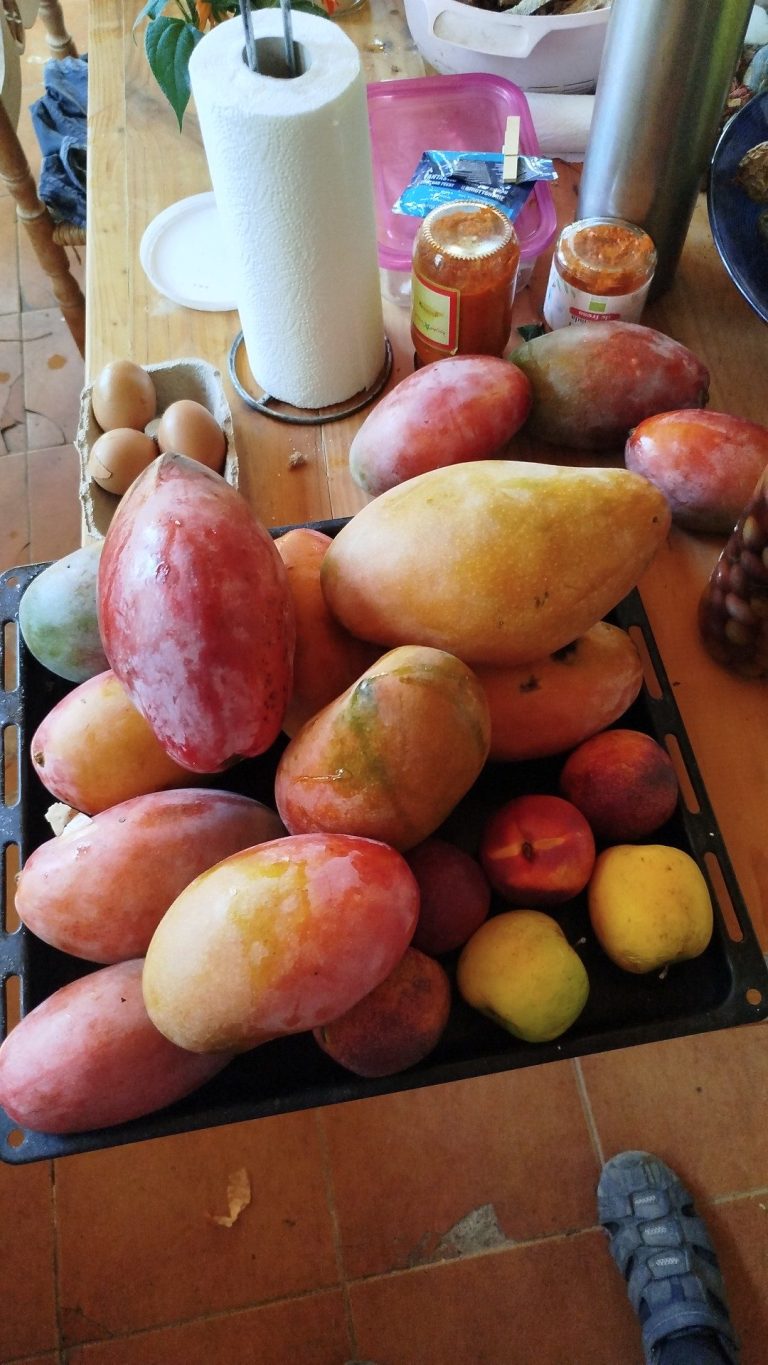
RIPE AROMATIC MANGOES
FROM THE CLOSE COSTA TROPICAL
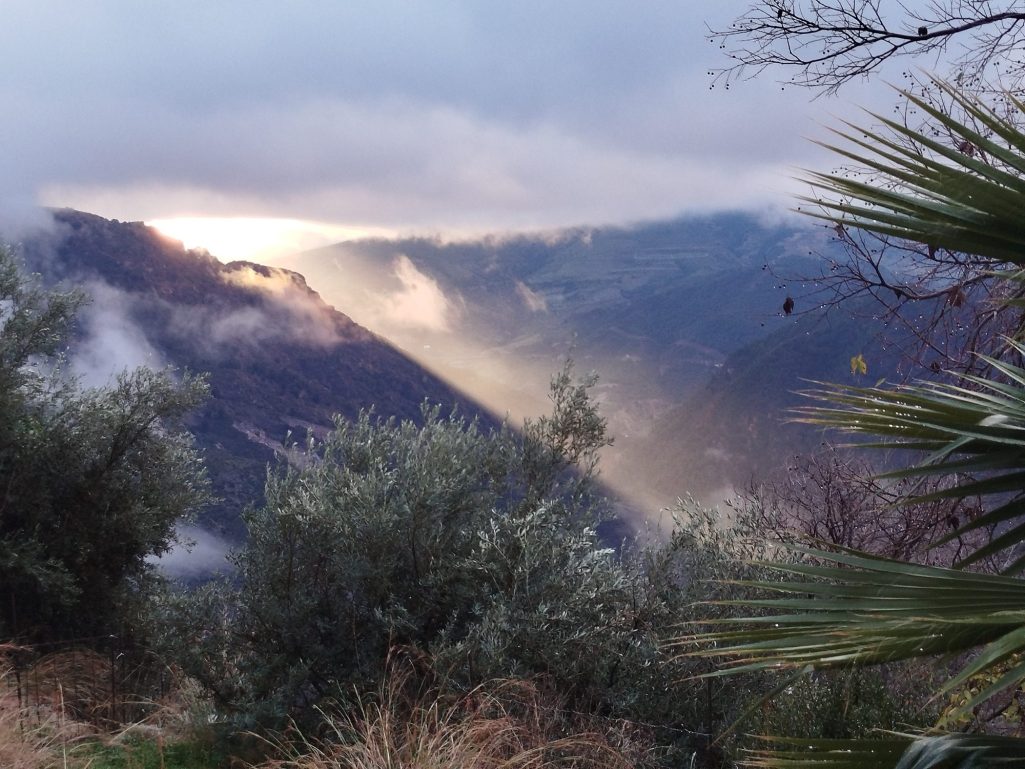
LIGHT FALLING THROUGH STORM CLOUDS IN WINTER
+ You can now also download the full text as .pdf to print or read offline (12 pages, from google drive)
+ Preparando traducción español del texto entero como .pdf para imprimir o leer sin conexión, pronto disponible.
+ Deutsche Übersetzung des gesamten Textes in Bearbeitung, in Kürze als .pdf zum offline lesen oder drucken verfügbar.
Chapters:
+ The Region
+ Our Land
+ Project History
+ About me
+ Two Spirit
+ Living in Community
+ Becoming involved...
+ What does morjin mean ?
About the Region - Las Alpujarras
Situated south of Granada, the Alpujarra Region extends from the south slope of mainland Spain’s highest mountains chain, Sierra Nevada (summit Mulhacen, 3479m) towards the less tall coastal mountain range named Contraviesa, with the Guadalfeo River Valley forming the center. Besides the sediment flats of the river, the entire region is characterized by a very mountainous and steep topography.
The Alpujarras are known for a number of unique features: It was the last refuge of the arabic moors before christianization, still visible in the typical white chalked, flat roof villages and also in their sophisticated still-functioning millenary irrigation system. The acequias divert water from the mountain rivers to slope-parallel channels, allowing gravitation-fed downslope irrigation by simply removing stones or metal slides on defined openings. Our climate is mediterranean, in general rather arid and very sunny, marked by hot summers and mild winters. Summers are always dry, but winters can differ significantly between extended periods of springlike sunshine as well as stormy and rainy atlantic intermissions. These rains falls as snow in the mountains, providing the essential irrigation water reserve for summer. As frosts and snows rarely descend below 500-1000 m, the lower areas allow a nearly year-round cultivation of subtropical fruit and vegetables.
While the non-irrigated ‘secano’ lands are often too dry to host forests, the incredibly diverse network of both man-made acequias and natural mountain streams or sources create numerous green and forested oasis areas, making the area predestined for diverse and enriching hiking experiences. The mountainous terrain also allows to choose between summer hikes in high altitudes and winter walks in the warmer valleys. And - as a wild mountain area, elemental forces are part of our life – we occasionally have to deal with the risk of wildfires, summer heat as well as winter storms and torrential rain events. On the other side, we also get loads of calm, comfortable and bright days to enjoy a sensation of timeless natural peace and wild beauty. Natural Mediterranean beaches can be reached in an hours drive, as well as the city of Granada.
As the area isn’t suitable for large scale constructions and industrial agriculture, it has preserved its authentic small scale farming environment. Traditionally being one of the poorest areas of Spain, many local farmers once moved away in search of a better outcome. Since the 1980s, this has attracted many alternative, nature oriented people (of both spanish and international origin) filling the void by starting ecological farming and community projects. The colorful but also chaotic hippie community of Beneficio is one of the oldest and most controversial alternative settlements, but many other smaller projects and private initiatives of very diverse character have since then followed. The regional capital town of Orgiva has since become a hub of alternative travelers and residents from all over the world, now offering an unusually diverse choice of events, celebrations, workshops and small scale businesses. Other nearby places, like Lanjaron or Pampaneira, are more orientated towards attracting tourists.
Written by Waitari (2026)
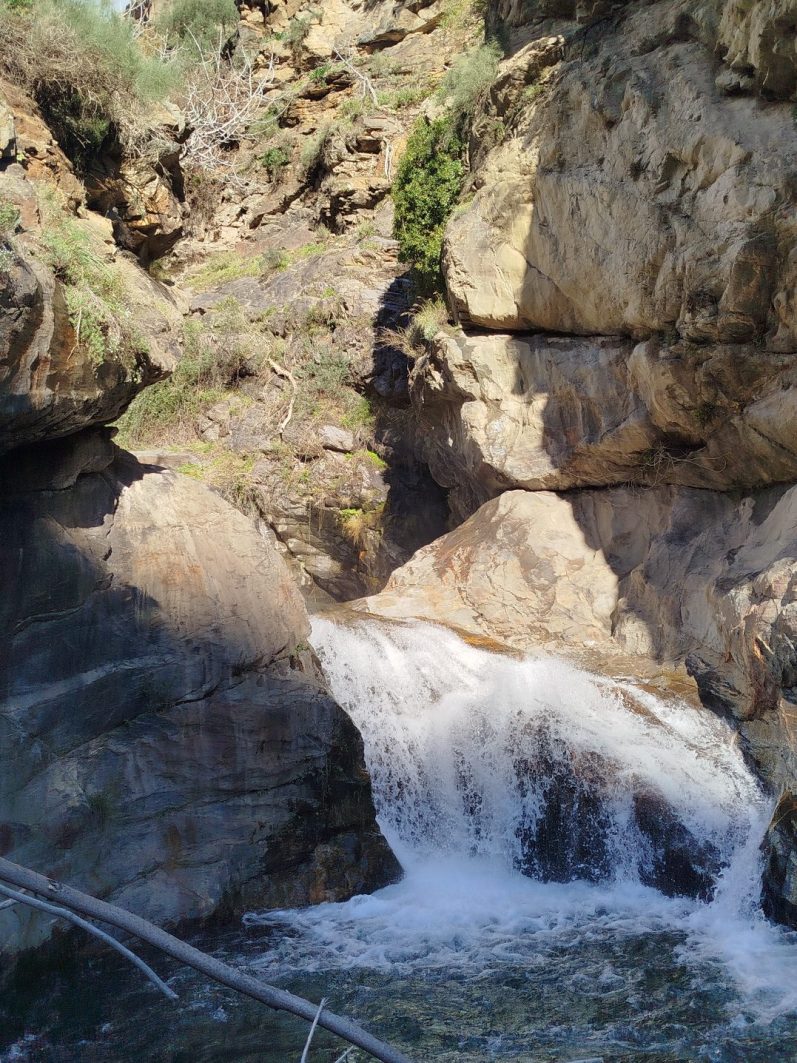
IMAGE: Poqueira River Gorge close to our Land
The Land
Our valley of about 50 inhabitants is – for european conditions – a very unique and unusual space to live. As it borders the barely accessible, deep Poqueira river gorge, many of the rustic stone-built farm houses (cortijos) including ours do not have road access. This means, any construction relies on man power, small machinery or – in the recent past - also donkeys for material transport. The other side of this challenge is peace – it’s a very quiet unspoiled natural environment valued primarily by solitary artists and real nature lovers. While difficult in accessibility, the valley is unusually rich in reliable water resources – it is crossed by three major acequias and several small run-off valleys (barrancos).
A community project formed in the 1980s has later fallen apart into many privately run renovation projects, bringing many of the before abandoned stone ruins back to live. Most of the formerly heavily worked land terraces separated by natural stone walls have since then turned into irrigated forest gardens. Our land of about 6000 sqm is situated centrally in the valley, at 780 m of altitude. The local climate is, due to the protecting mountain chains and its south exposure, very beneficial and allows the cultivation of many both temperate and subtropical crops or ornamental plants. While we are nowadays neither an official community nor ecovillage, but rather a self-organized rural neighborhood, mutual cooperation is still very common. This includes communal work as well as privately run events or parties.
Our house had been partly renovated before, but got abandoned again. We had to start from scratch, gradually rebuilding the partly ruined cortijo with light weight and do-it-yourself solutions artistically imitating the traditional flat-roof character of local houses. While (under comfortable but eco-alternative standards) currently well habitable for two people, several parts still remain unrenovated and could in future host two or three more people. The land also offers the possibility of constructing separate small-scale huts. While olive trees had already been present, we planted about 20 varieties of fruit trees including exotics like bananas, maracujas etc., numerous ornamental plants and created a large organic vegetable garden. To avoid wild boars from digging up our gardens, parts of the land had to be fenced. Surprisingly, for such a location, we actually are connected to the grid, have public drinking water supply and a relatively good mobile network reception. The service though is susceptible to the impact of elemental forces and short time interruptions are quite common in winter.
Living here or even visiting demands a certain level of physical fitness and outdoor experience, as every supply has to be carried in from the public parking via an 800 m long, partly narrow footpath. Furthermore, the gardens are distributed over several stope terraces and many activities resemble small mountain hikes. Gardening and construction work, as well as the necessity of irrigation (summer) or providing firewood (winter) sustains an over-average level of fitness and practical skills for many people in the neighborhood. Despite occasional rough and cool storm episodes, many winter days offer perfect conditions for outdoor work and activities – sometimes even allowing to sunbath naked in the afternoon. In Summer, activities focus on the morning and evening, while the day heat of 30-35 degrees invites to rest (enjoy the typical Siesta!). The local lifestyle is very marked by arts, creativity, music, spontaneous social encounters, physical do-it-yourself activity and long periods of rest, introspection and self-discovery.
Written by Waitari (2026)
IMAGES:
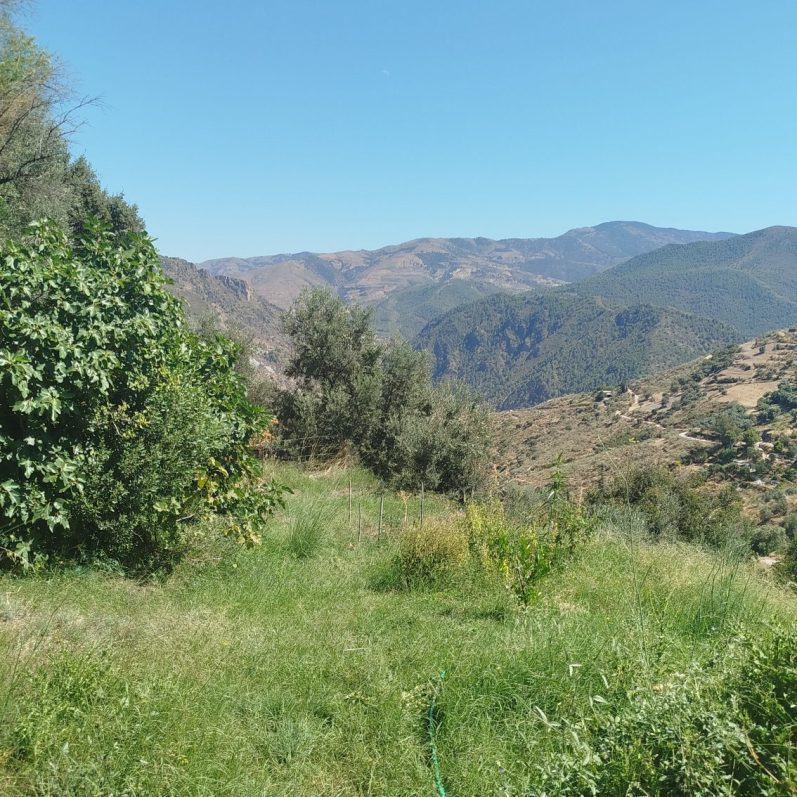
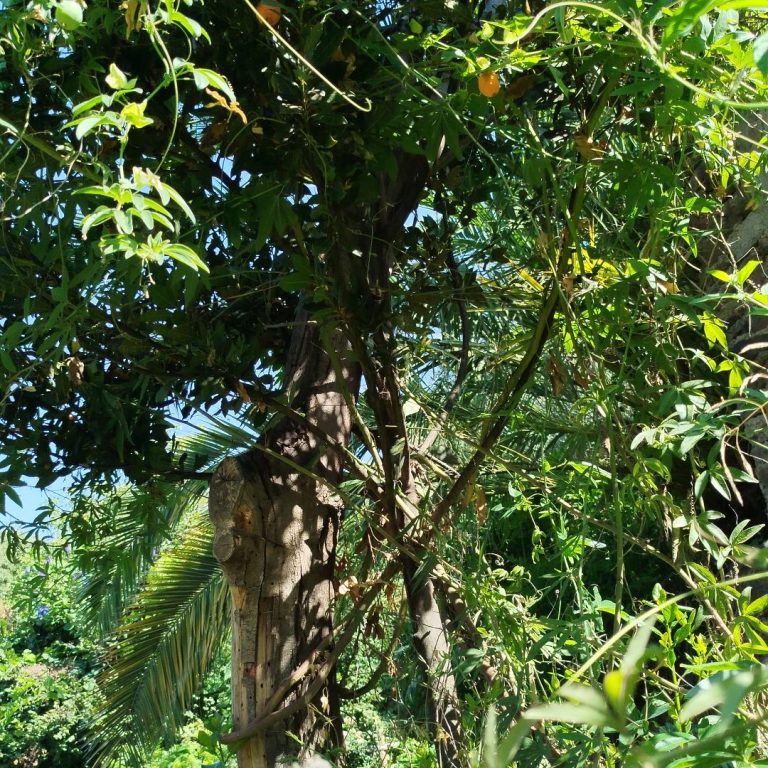
- Jungle like gardens on house terrace
-Irrigated terrace above House
Project History
The cortijo (farm house) build on this land used to be a traditional smallholding, probably dating back about 100 years. Besides the typical olive orchards, farmers temporarily also cultivated grains or kept cows, with the latter being especially unsuitable for the steep and limited land resource. The cows damaged the moorish stone terraces, causing parts of the land to collapse and erode. Fortunately, most of the terraces did survive and are still intact.
The whole area finally became abandoned since the 1960s, with this land only becoming resettled since about 20 years. This was part of a wave of eco-oriented resettlement originating from the split-up community project further upslope. In this episode, lasting maybe five years or more, the house had already been well renovated, including the construction of a large swimming pool now also used as an irrigation reserve (alberca). Unfortunately, the history of the couple restoring this space did not end well. Roughly 15 years ago, they split up in bad terms, and the man who had invested inhumane amounts of energy into his work later again destroyed part of it in his rage. The house and land became abandoned again, and was left for sale for another ten years.
It was us, JunisVanKoolwijk (75) of dutch origin and me, who became stunned by discovering this unique location, local climate and water abundance. We met as friends through the radical faerie movement and were originally exploring Portugal to find land, before we discovered the Alpujarras through a mutual friend. We shared the interest of eco-gardening, land management and living in a more southern climate, and had to accept financial limitations to our choice. As I had gathered experience in do-it-yourself construction and challenging outdoor experiences, I decided to take a chance on it. It had always been my dream of building or renovating my own ecological living space, and in most parts of Europe, overly strict regulations pose a big limitation to such creative experiences. Passing through the turmoil of the corona pandemic, the restoration of land and house gradually evolved and still is evolving. Everything goes very slow – this isn’t the rushed modern fast lane life most of us are used to. Next to carrying materials and restoring buildings, the gardens also like to be maintained, irrigated, and even the daily chores of life do need more time here than elsewhere. And not to ignore, most of us living here are artists. We also like to relax, play and dream. It’s indeed, like they say – the journey is the true destination.
* * *
While our 7 years of living here have been very rich in rewarding and transformative experiences, involving learning a number of new skills, they also went along with repeated challenges. Partly due to the odds of adjusting to a very new way of life - and partly due to the age difference and differing life situation between me and Junis. Our paths of life gradually took different courses – for Junis, it stayed mostly a half-year winter residence, still being strongly connected to family circles in his home region. Being a generation older than me, his needs were more focused on enjoying a peaceful time of retreat in nature, with ongoing construction needs and physical challenges rather being a burden. For me, however, being self employed, sustaining a split life between two locations was both economically difficult and often also very stressful. Running the place alone over the summer months, despite enjoying the work itself, was often time consuming and very limiting in freedom, also because of regular irrigation need. It made me realize, that sharing it would not only allow more progress and sustainability – shared work and creativity is also simply more fun !
In this point, the different situation between me and Junis became very obvious. Being very sensitive to noise and in a stage of life rather marked by retreat than facing new challenges, his priorities didn’t align with mine. This was obviously also due to our real life situation – for him, being retired, this always remained secondary home, while I was strongly influenced by the need to sustainably thrive and find balance in a completely new way of life. Once sensing, that I either had to give up or try and grow roots here, it did send me through a profound and insightful rollercoaster of confrontation and self-discovery. It meant, for example, renewing my social circles, finding a way to survive financially or accepting limitations in visiting my family of origin. Passing through a number of changes, the situation finally made Junis decide to simplify his life and gradually move out, while I chose to move on and try to realize my vision of a small, familiar community.
Written by Waitari (2026)
IMAGES:
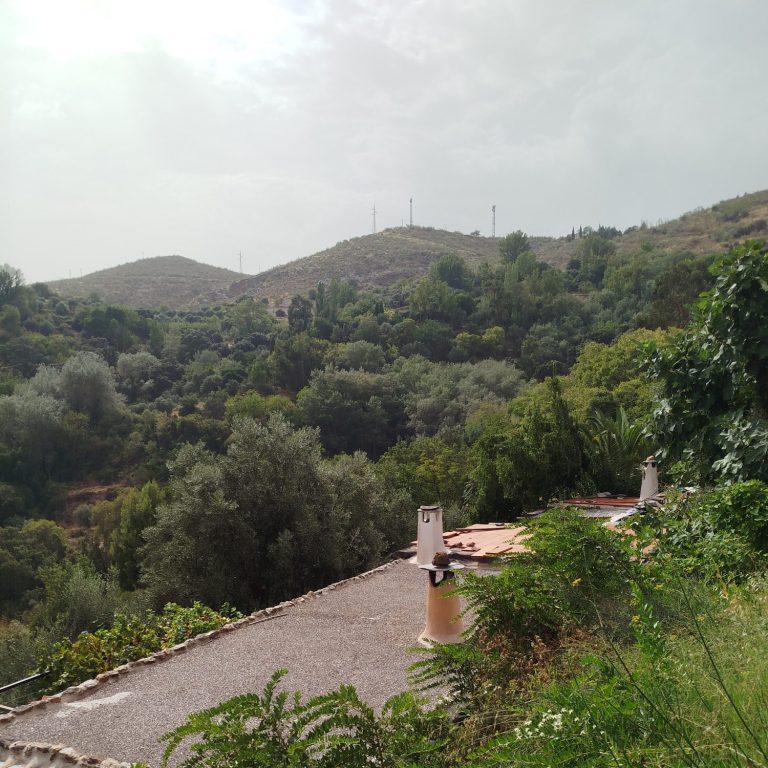
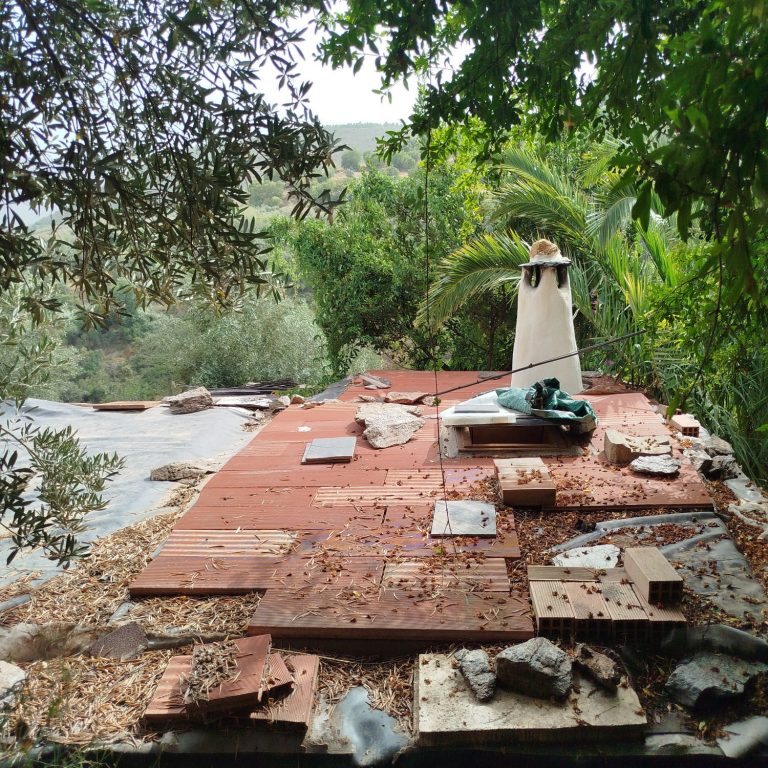
- Fully renovated Alpujarra flat roof.
- Partly renovated Alpujarra flat roof.
About me...
I was born in 1981 in northwestern Germany, but soon got exposed to a lot of international experience as my father’s career took us abroad. The return to Northern Germany after years in South Africa (and Belgium) felt difficult and depressing to me, missing the light, diversity and adventure experience of warmer and wilder environments. After achieving a Diploma in Geography (including Meteorology, Climate Studies and Botany), I started traveling to many exotic places worldwide in order to both avoid dull winters as also to find out where I want to live. Having moved so much as a child and teenager inspired creativity and learning, but it also caused a sense of being uprooted, having no true home. Since teenage time, I always wanted to live in wilder, more natural and authentic environments.
My artist name ‘Waitari’ means ‘he who speaks/sings for joy’ in an invented language I am creating as part of a very profoundly researched utopian novel writing project. It's a sophisticated project I am really passionate about, and I probably will be busy with it - next to all the other land activities - for a few more years to come. Under 'Why morjin', I will share a little bit more about it. Furthermore, I gain a fluctuating income from all kinds of construction projects for houses, land management or irrigation systems, where I have accumulated a fair amount of experience and crafting skills. It’s a lifestyle of low cost, low income and self-responsibility which made me unfortunately often struggle with not fitting into any conventional governmental form of registration or employment. Another passion-driven initiative of mine is Alpumet, a voluntary local Alpujarra weather forecasting service distributed via common messenger apps. I brought it to life after realizing that public weather services often fail in this region due to the complex mountain topography. This winter (25/26) has been quite a challenge, as we got the roughest weather conditions since 15 years, causing quite some damage - but also completely quenching the persistent drought conditions of the years before.
I still consider myself as a rather introverted, sensitive nature, although I always tended to push my limits in order to overcome fears and continue learning. As a child, I was very lucky to always find true support in my nature loving mother, who introduced me to the world of vegetable gardens and flowers already in early childhood. While showing less interest in human culture and media than most people, I kept then diving from one subject of nature fascination into yet another, learning about mushrooms, plants, geography, climate and meteorology already way before study times. Next to overseas travel and ecological voluntary work experiences, I have lived in community run houses and voluntarily exposed myself to the effects of several psychedelic (mind-altering) substances. A major driving force in that exploration has been the understanding of my unusual and confusing relationship to sexuality and gender roles. For many years, I considered myself a gay man by being attracted to male beauty. At the same time, I kept failing to find any satisfaction in the urban orientated and sex-focused gay environment. I was much more drawn to nature orientated, ecological or hippie-alternative circles of people, but there I was unfortunately often the only guy somehow outside of typical male and female role identities and relationship patterns.
* * *
Trying just about anything to understand my strange path of life, I later discovered the radical faerie movement. It's probably one of the only social spaces merging alternative, nature- and community oriented lifestyles with queer identity. Participating over years in a number of gatherings in a remote part of France, I met Junis, reconnected to my joy of being in wild nature and learned a lot about non-authoritarian self-organized community structures. Although I do consider as a very enriching time of social experience, it still didn't eliminate my confusing feelings of neither being straight, nor truly gay. This was a persistent issue, which send me through repetitive deep identity crises, often not knowing how to make ends meet in terms of social needs and finding my space in human society.
It was that same confrontation though, which also kept me in a forward movement - trying unusual paths of exploring life, guiding me through worlds of discovering consciousness, liberating myself from common social role models, judgements, ideologies and expectations in order to be released from suffering. This did not only deeply inspire and shape my current path of life, including the content of my current utopian writing project. It also lead to the growing acceptance of being what I am, neither gay nor straight, but actually finding fulfillment in being my own lover (read more under 'two spirit'). This weird path of self-acceptance in completely dropping out of any conventional sexual or relationship role - such an important anchor of human society - made me evolve towards someone generally questioning fixed beliefs, role models and ideologies defining wrong and right in society. It has made me aware of how society can suppress our true nature and the simple joy that comes with it, simply by unconsciously following a set of historically grown ideas. Ideas old enough to have become widely accepted, but that doesn't conclude, that they are beneficial for life. They might somehow function for a majority of people, but shouldn't any truly advanced society be based on being inclusive towards different, yet peaceful alternative paths of life ?
Written by Waitari 2026
IMAGES:
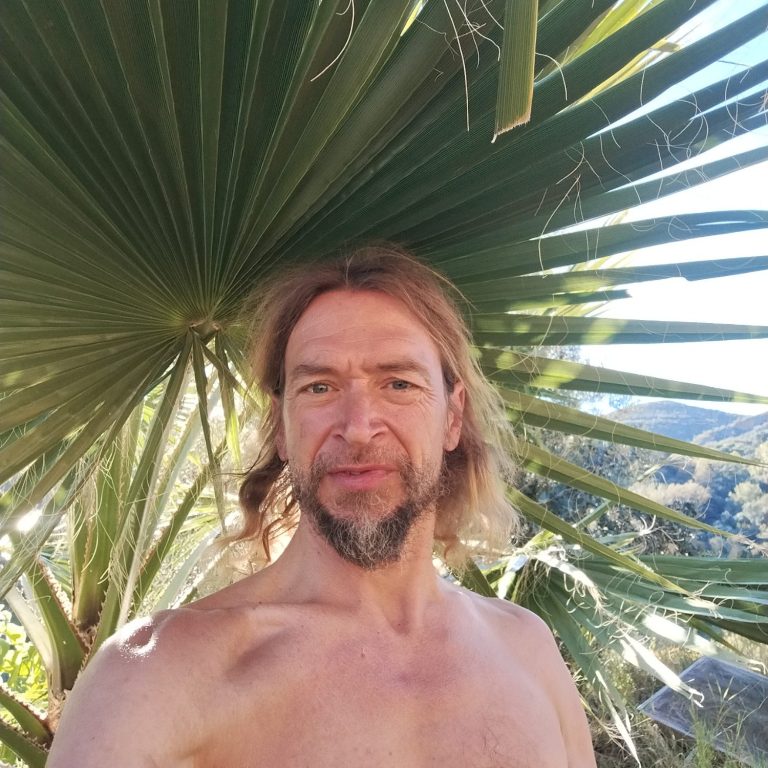
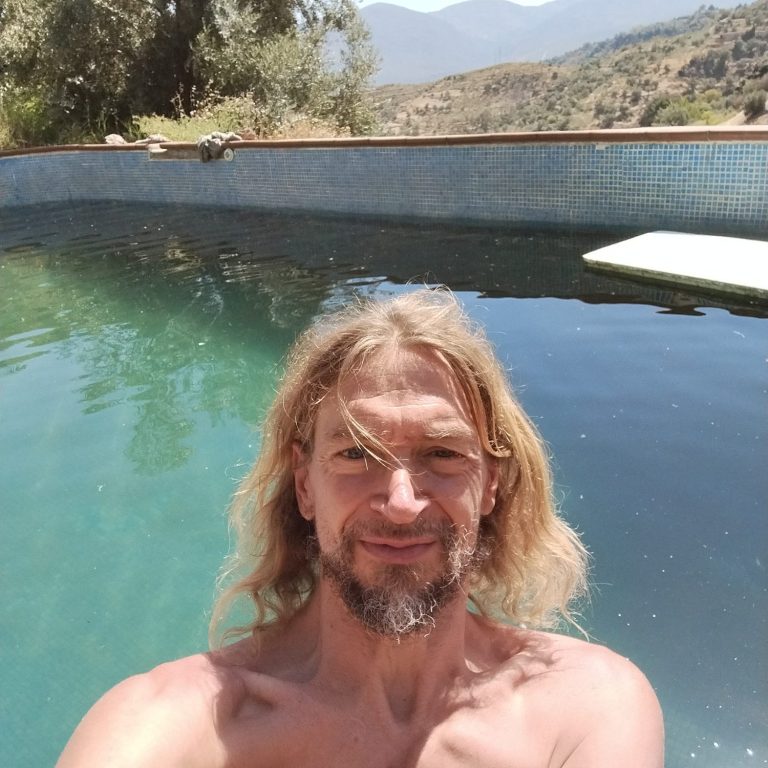
me in my prefered subtropical environment here on the land :)
Roles of Society
My path of life has become like an unexpected guide book to transformation. With a childhood influenced by foreign cultures, I quickly felt attraction and interest towards lifestyles of native people, still living in an inevitably strong relationship with nature. I often did feel pretty alienated by the urban modern lifestyle, its large-scale and commercial constructions – what a contrast to the open adventure playground of nature I grew up with.
Later, my confusing journey of discovery within the world of gender roles, sexuality and relationship made me question why humanity is still so stuck in these conventional role paths. Why, just as a silly example, is it normal for two female friends to cuddle, but rarely so for men ? This was followed by a period of intense psychedelic experience, yet again opening the horizons to very new interpretations of life and its purpose. And now, this life within the elemental influence of the mountains has send me through numerous other and seemingly unlimited sources of confrontation and discovery.
It has brought me in touch with the playful joy of truly and simply being alive, and in which way it contrasts with the rules, fears and limitations of human society. I have become a profound denier of authority over others, neither by hierarchy nor ideology. I want myself to become free, and so do I wish for others. I understand, that this involves a path of consciousness and self-reflection. I invite people into my life, who equally struggle with predefined boxes and regulations in society, but do not want to get lost in the struggle and projection, but rather love to create something new and uplifting ! This surely involves courage – it is not easy to dare to be yourself, and even more so to express this peacefully towards others.
I invite human relationships, intimate friendships, liberated from the domination of sexual connection and couple relationships,
valuing loving touch and emotional openness towards members of both genders. Saying this, it doesn't mean I am against couple relationships. It's just that religious and modern history has given them such a superior importance, also overloading them with pressure and expectations, while other sources of human love, intimacy and mutual support have often been pushed to the side, neglected or considered secondary in society. Leaving people like me, or those who lost their partners, etc. often simply behind.
I invite the freedom to discover our own power of contribution towards life, liberated from predefined roles of gender, age or cultural upbringing. I invite to explore a natural, joyful and creative approach towards productive activities, dissolving the boundaries between work and play. I invite to take good care of our bodies, by cooking delicious and wholesome meals based on natural ingredients, without being focused on any fixed diet. Or by discovering the pleasure of being physically alive and active, by enjoying nature’s abundant gifts like sunbathing or taking a refreshing swim. And finally, I invite to find our own individual balance between social time and individual space, allowing enough time to retreat into inner worlds or engage in our own art.
I see life as a playground, with the only true rules being kindness, authenticity and the courage to share your emotions and needs. The latter is necessary - if we don't share, how can others find out what we need, what is disturbing us or what makes us happy ? Sharing can also help us find more clarity for ourselves - by expressing towards others, we need to know ourselves what's actually really moving us.
Written by Waitari (2026)
IMAGE:
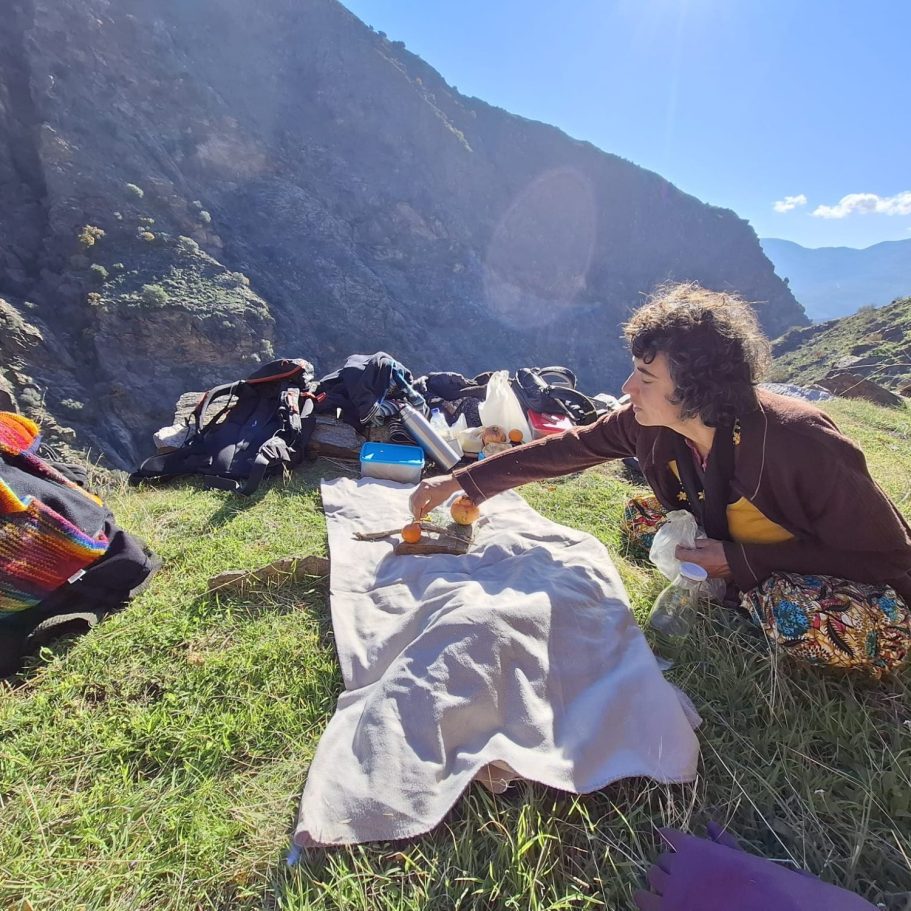
- sharing a nature ritual with friends
Two Spirit
By rules of political correctness, I am not supposed to use this term - as I am not born Native American. This, not denying, that I did get exposed to a lot of Native American culture elements in my life. But I do find it the most adequate term for my path of life.
To start, it’s less connected to all that complicated queer terminology, which is for me far too loaded and political. I just want to be myself and not make life more complicated. But much more important, it implies being somehow entangled between both female and male characteristics. I see myself as being biologically clearly masculine and I always did feel naturally attracted to many activities rather considered masculine, like outdoors adventures, learning crafts etc. My way of processing and dealing with emotions, my relationship to sensuality, though would rather as feminine by standards of our society. In this way, I only very gradually came to an understanding that my ‘female’ emotional part finds attraction towards my own ‘masculine’ physical appearance, allowing myself to find satisfaction and joy in being my own sensual lover. For many years before, I struggled and judged myself for never really feeling any true sexual attraction towards others. I tried to squeeze myself into relationship roles or sexual encounters, just to fit in, but I experienced them mostly as a burden, feeling pressured to do things I didn’t really want to do.
Sharing this obviously doesn’t mean I have no interest in loving connection towards others. It means, I am just not looking for any fulfillment in sexual encounters or couple relationships based on them. Yes, in that way, I am pretty different, and I have barely ever encountered people expressing something similar towards me. A reason why it was so difficult and confusing to understand my own path, devoid of any examples or role models to follow. Also a motivation to enter psychedelic exploration, as I intuitively felt that I have to find answers within myself, as I couldn't find them asking others.
I am somewhat equally attracted to the beauty and inner nature of men and women, and I love to share hugs, cuddles and emotional expression with both genders. I physical terms, I might even be slightly more attracted to the beauty of male body shapes, which can be explained by what is written above. For a long time, I did confuse this attraction with sexual attraction, tried it out, but it simply did not work. Neither with men nor with women. And yes, to be honest, I did often suffer from the lack of sharing sensual - but not sexual - intimacy with other men, something I could barely ever find, neither in the straight nor gay world.
By not really fitting into sexual relationships of any kind, sharing true friendship and a sense of family might even be more meaningful for me than for those who do thrive as a couple. While gradually accepting myself in this way began to liberate me from many of the emotional struggles I went through before, it is still confronting within a society primarily organized in couple relationships and nuclear family structures. It means, often, somehow feeling socially left out and needing to do a lot of things usually shared in couples – like traveling - simply alone. That is why sharing community is very important to me. And in a way, it's nothing new, it's about bringing back what used to exist in human societies for a very long time. Living tribally, sharing life in an extended family. A way of living that doesn’t only benefit people like me. It safes a lot of resources by sharing, it gives children a more diverse and rich upbringing, it increases social and practical learning and also makes it more easy to accommodate elderly people within a familiar and loving environment.
I wish for creating a space where I am welcome the way I am. Where I don’t have to be someone’s partner to be loved or to share my life in a honest sense. Where I can cuddle with both men and women. And I truly wish the same freedom of being yourself for anyone around me.
Written by Waitari (2026)
Living In Community
I made a barrier of words, to allow only passionate and truly curious people to pass. I am by nature a scientifically curious guy, but also pretty playful. My understanding of community is not based on any defined spiritual, political or ecological path. Instead, it comes from a very grounded human need of sharing life.
One motivation I have explained enough – I simply don’t thrive in couple relationships and need to explore other ways of honestly sharing my life with others. Another one simply comes with the situation of this land. It’s big enough to host more people, and the work that comes with it can be quite overwhelming for one active person, but already rather doable with two, and with three or four of us, it can be really fun. By sharing the place, a lot of new possibilities arise. We can share resources, like practical experience, tools, cars, work power. This can reduce living costs, also by being able to produce more locally, like home made bread, vegetables, etc. Together, we can tackle projects that would take forever if done alone. We can support each other in times of difficulties or health issues. We are more free to travel or visit our family of origin as there is always someone here. We may share emotions, play, or cook and enjoy delicious meals together. We can enrich social life on site by meeting each others friends, family or – if wanted – creating parties and events together. My wish is to bring this place to life, and mutually or individually enjoy the diverse options already present or envisioned:
Swimming in the pool alberca. Taking the adventurous path down to the river. Enjoying nature rituals and ceremonies. Going on trips to the nearby, culturally and naturally diverse surroundings. Cultivating the organic vegetable and fruit gardens. Restoring remaining parts of the house to create more living, guest and work spaces. Building one or two extra huts on the land. Building an outdoor shower/bath house with a proper compost loo, replacing the currently improvised bucket loo. Irrigating the land in summer, keeping this lush green subtropical oasis alive. Sharing events like Sauna or music sessions with the neighborhood. Creating a second nature alberca further up, both for more summer water storage as well as to enjoy aquatic plants, frogs and dragonflies. Creating a chicken cube and run for having our own eggs. Or enjoying quiet time alone. And obviously, more projects yet to be invented by all those interested in living here.
As a high sensitive, very perceptive nature, I might be lively, but usually not very noisy. I do spent a lot of time with myself alone, and looking at my neighborhood, I believe this valley is somehow predestined for people who need quite some introspective time alone as well. In this way, shared living for me doesn’t mean at all to give up all your freedom. In contrary: Yes, it does involve sometimes organizing stuff together, or talking things through. But as it also makes life way more affordable, diverse, provides mutual help, it can easily give more freedom, than it takes. It just needs us to be clear, free of prejudice, able to observe, perceive and learn.
While many shared living situations define strict rules, e.g. only vegan food, no alcohol, etc. etc., I never felt attracted to such limitations. For me it’s all about consciousness, not about what you consume, drink, eat or feel attracted to. Consciousness means, being aware of what we are doing, and whether it is doing us and others good or not. Some people love to drink a relaxing glass of wine, beer or smoke a joint/vaporize, and it enriches their life. Others use those same drugs to hide from reality or drown their emotions. I invite people who are mature enough to choose for themselves, without limiting diversity for others. It’s fine to cook meat and create a vegan dish as well.
I invite to explore spirituality as an individual or shared means of discovery, without having to agree on any set of beliefs. I see life as an adventurous journey of discovery, and we can only truly learn if we stay open to experience, make mistakes and don’t get stuck in any fixed sense of wrong and right. This also means a space of no prejudice, where we can share openly about our experiences, without fear of being judged. Obviously, in every relationship, family or community, there can be conflicts – conflicting needs, like enjoying loud music or desiring silence. Or issues that really impact the freedom of others, independent of any judgements. Those issues can only be resolved by openly addressing them, finding compromises or solutions together.
I would like to invite people who trust life, who believe that we humans are by nature kind and loving beings, maybe somehow distorted or damaged by history. People who trust that self-discovery and sharing with others can help us to rediscover our own true nature, and the simple joy of life that it brings. And if you, reading this, also have a history of not fitting into sexual or couple relationships, but wishing to share life with other humans, I would also like to especially invite you to get in contact. Again, it doesn't mean I reject those who are in happy in couple relationships, it's just that for those who don't, our current society doesn't offer many good alternatives.
For now, it's only me putting these texts together. But I am happy to include your inspirations and learn more !
Written by Waitari (2026)
IMAGES:
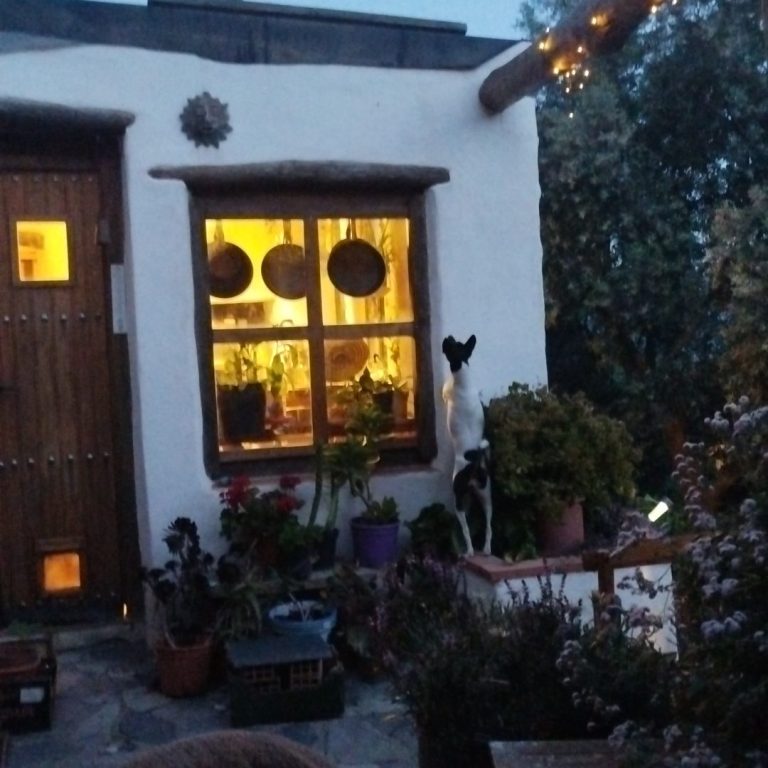
- entry to the kitchen in evening light
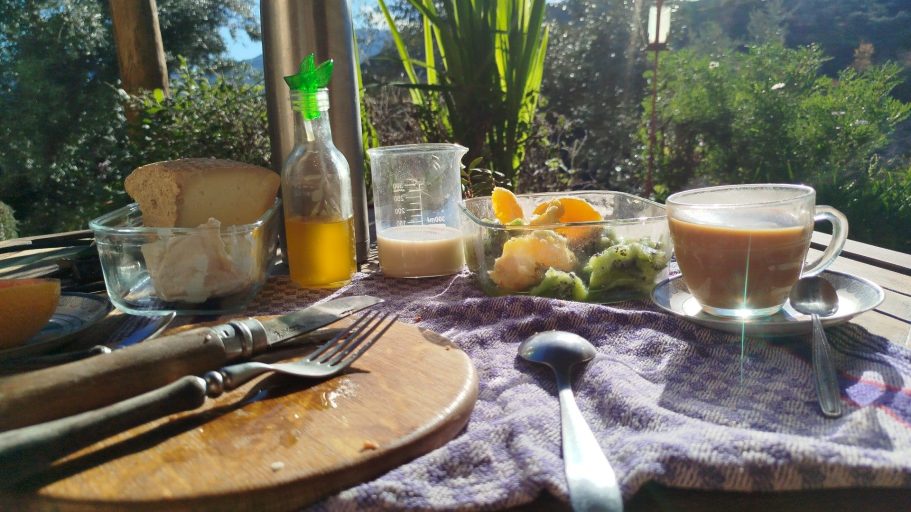
- enjoying a rich brunch with own olive oil in the winter sun
Different Ways of becoming involved !
Well, we are slowly moving towards the end, and it's time to descend from the sky of visions and touch the ground again ! I thought of three different forms of participation - so, if you are curious, you can be part of this in a way that seems doable for your life situation !
1) I want to live here !
Finding people to share this land together is important – because it needs more hands and hearts to bring it alive. If nobody is willing to take this step, I might have to give up on the long run and sell. Because it's actually to big for me alone. And it's also not the life I really want - Iooking back, I always wanted to have some kind of shared living situation.
But living here obviously means taking the courage to really leave your old life behind and starting something new. It involves investing money in the construction and finding ways to adjust the paperwork to make everyone involved feel safe and free. It’s a process that needs time. It also requires a relatively high level of physical fitness and some skills, e.g. woodworking, gardening, farming, land management skills - or anything else that can contribute to keeping this place alive and thriving. If you have never done anything related, or if you don’t feel comfortable walking mountain paths with a filled backpack, I can’t recommend this to you.
And if yes, and you are curious, the first step is to get in contact, exchange, and come for a visit, or two, or three. We first need to get to know each other, before moving forward. Junis currently shares 50% of the ownership with me, and would like to sell his part to gain freedom to do something else physically less demanding, like buying a new camper. This involves more money, but his living space is already inhabitable. Building huts or renovating existing parts might be doable for less, but involves work. It could also involve temporarily living in a tent, or renting something in the surrounding, until it's ready to move in. It’s doable and a fun learning experience, but I can’t get it all done alone, with limited time and money resources. And concerning ownership and paperwork, I am not an expert in this subject at all, but love to develop something together that feels good for everyone. Turning the whole place into some kind of trust that guarantees a permanent living space for everyone involved, unless deciding to leave it to someone else. Maybe you know how ?
Furthermore, living here also means being able to sustain ourselves somehow. The cost of living in this place, especially if resources are shared, are very low compared to European standards. But so are also the possibilities to create income in this region. Jobs that seem to work kind of well are anything related to land management, non specialized construction skills, or maybe producing high quality agricultural products like olive oil. Note, that this land isn’t very suitable for producing agricultural goods except for our own use, as it is steep and has no road access. Exceptions are e.g. essential oils, home made creams or concentrates etc., which could also be sold online. Otherwise, working online is an option, or obviously living from other income sources elsewhere or financial reserves. For any more details or questions about living here, feel very welcome to ask me.
2) I want to be involved and visit
I also would love to create a circle of interested people, who share parts of my vision and would like to become involved without wanting to or being able to live here. It would be great to have people coming over and visiting, sharing some work and play, inspirations and getting to know each other. Obviously, even visiting involves a minimum of physical fitness – at least feeling comfortable with walking narrow, exposed paths and carrying a backpack. It's a nature place ! It also depends on available accommodation space or being fine with staying in a tent. And outside of visits, we can keep in touch online, sharing developments here and elsewhere, and I might be curious to visit your place as well.
I am very curious to meet other people who have been on the path of exploring consciousness, who have creative ideas about making human society a better place, who are very interested in nature sciences or who love to share their crafting skills e.g in eco-construction etc.
Also, I would like to meet others who feel attraction towards being more playful and free with gender and sharing touch, less stuck in old role models, independent of any identification as straight, queer or whatever. Further those
who felt resonance about my path of not really fitting into any conventional roles of sexual attraction or relationships, in order to learn from each other and feel less alone. And finally, if there are even others like me, who are happy being their own lovers - whatever gender.
3) I want to support the project !
Last but not least, those who find interest in my vision or my writing project and like to support this work or the developing community either by sharing your knowledge and experience or by donating financial support are also very appreciated. I want to learn, and integrate my learning into community building and my writing.
Obviously, I do most of my activities on my own account, and it involves lots of creative and physical work with relatively little income. So, if you have some free resources concerning time or money, and would like to support the project, feel welcome to get in touch and let's find out how.
I am also very happy to share my experience, knowledge and resources in return. If my knowledge or experience might be valuable for your project, whatever it is, Iet me know. Let's create a mycelium network !
Written by Waitari (2026)
IMAGES:
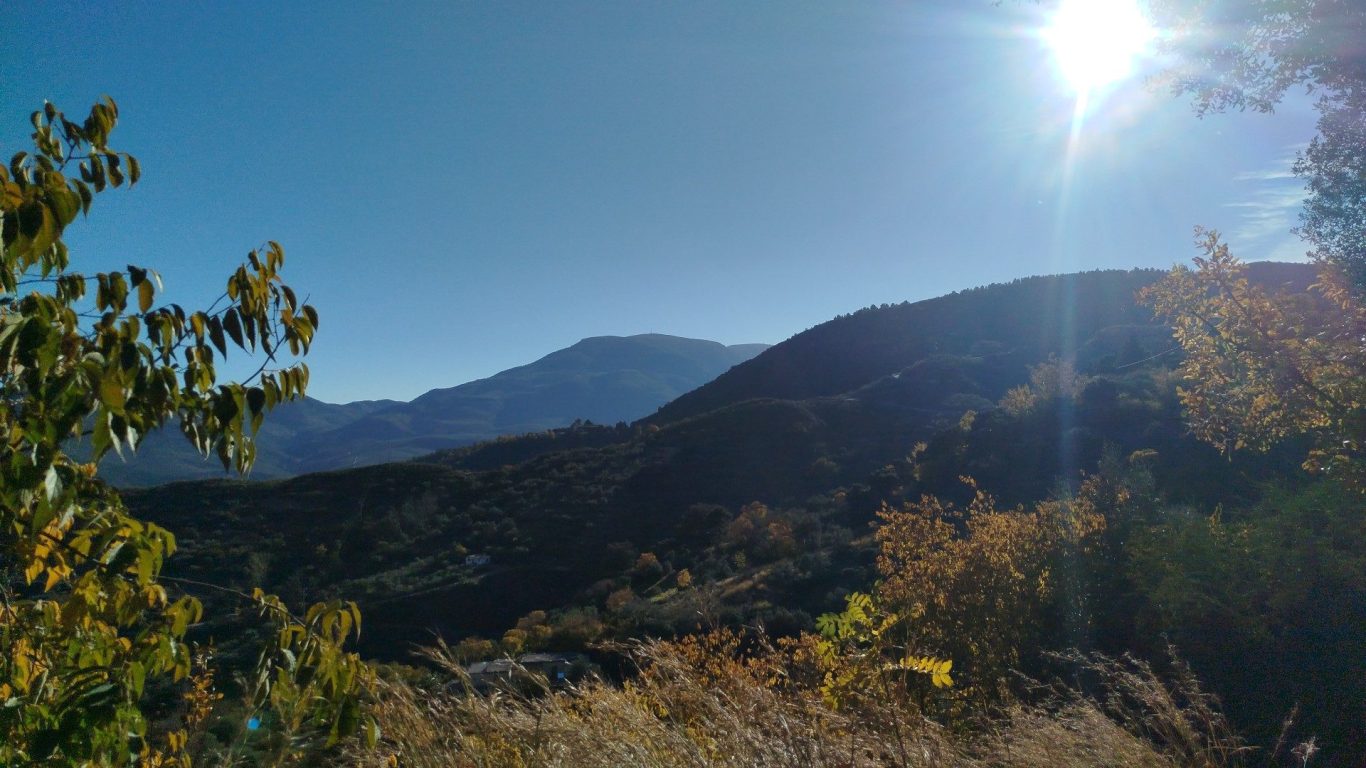
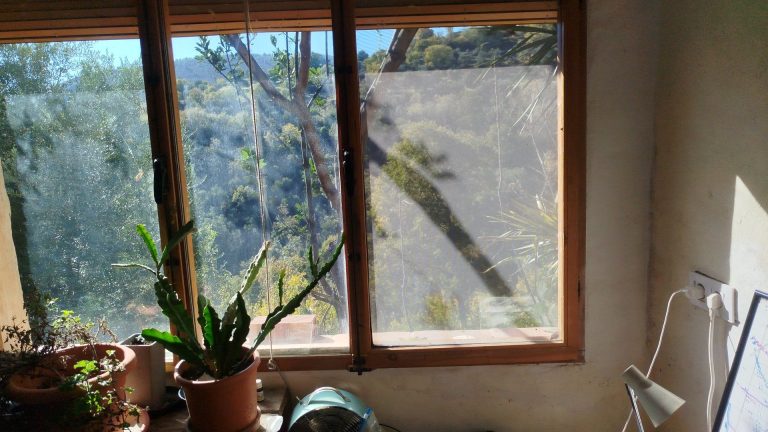
- view from my south facing window
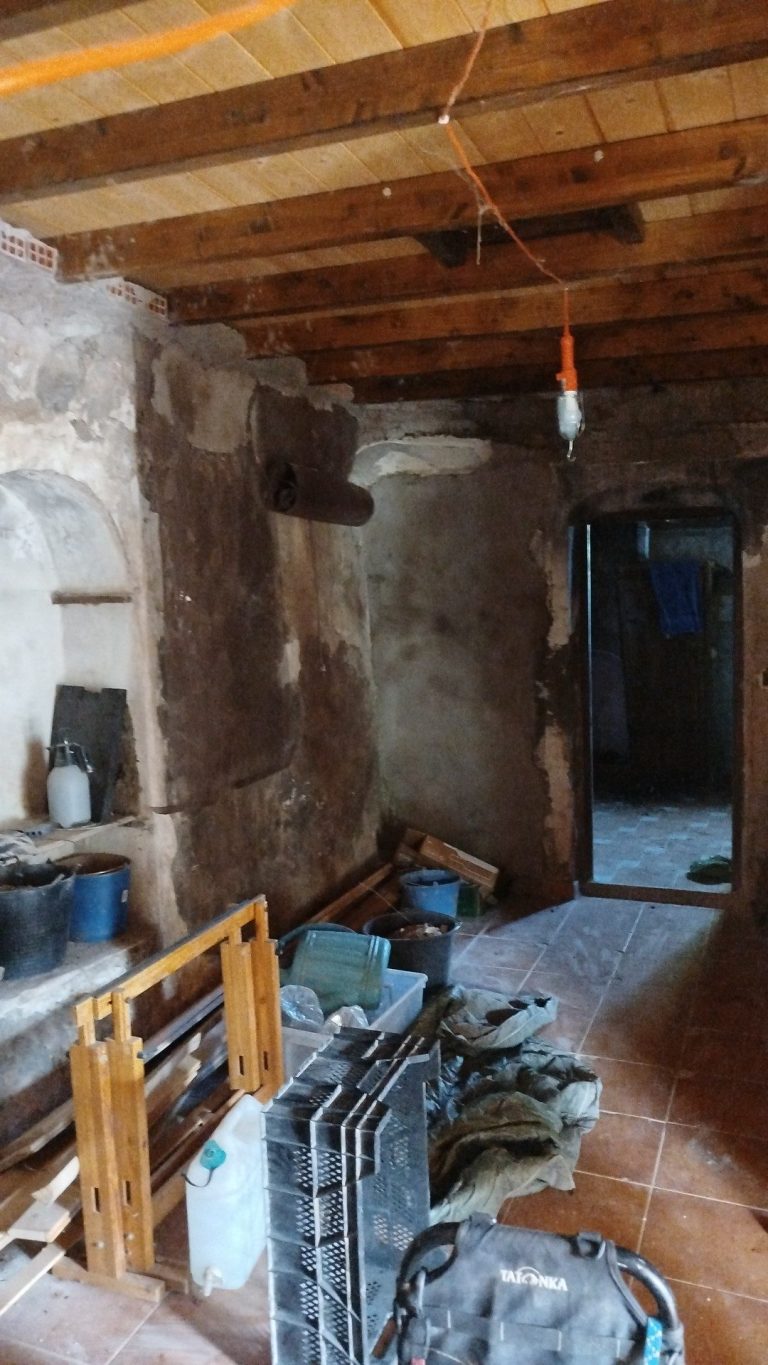
- storage room in current state of unfinished renovation
What does morjin mean ?
So, finally coming to the end !
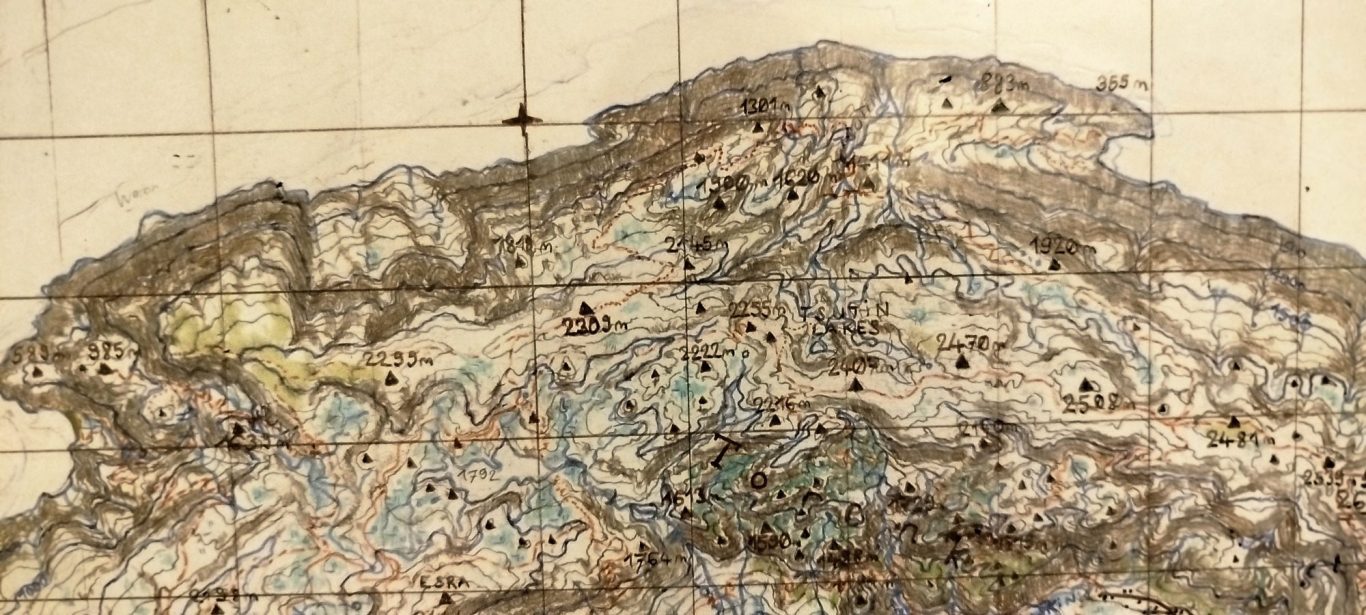
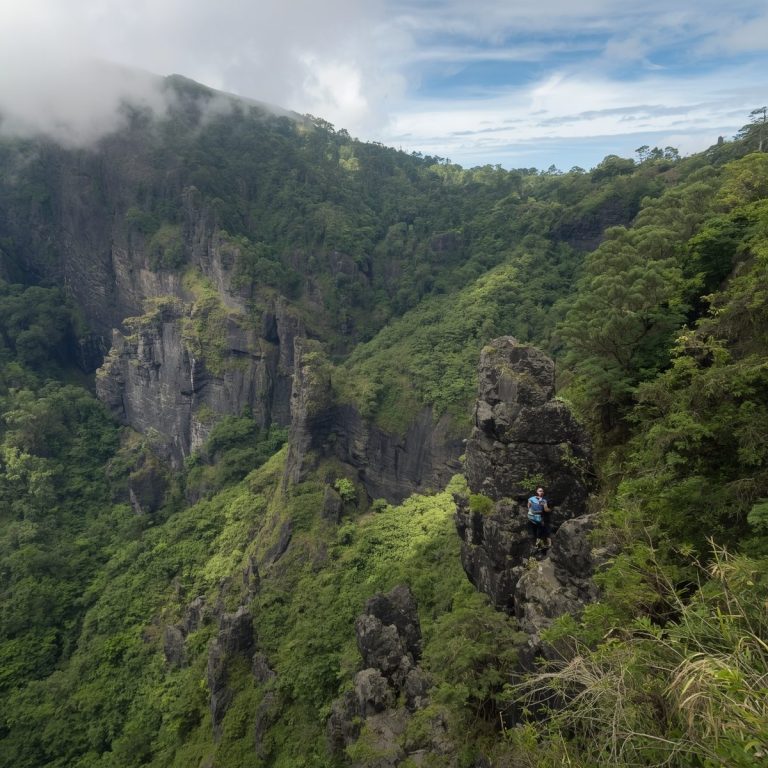
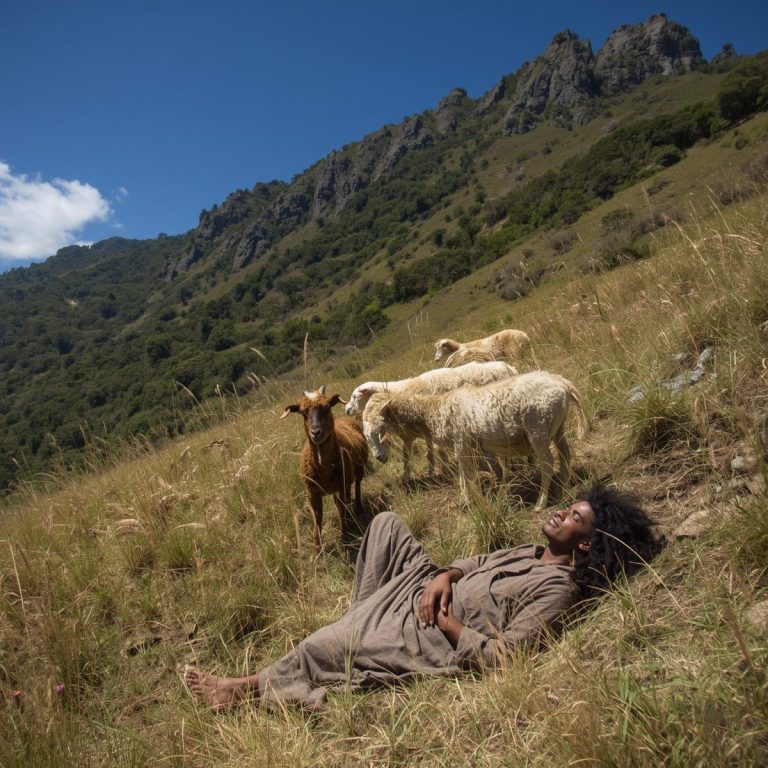
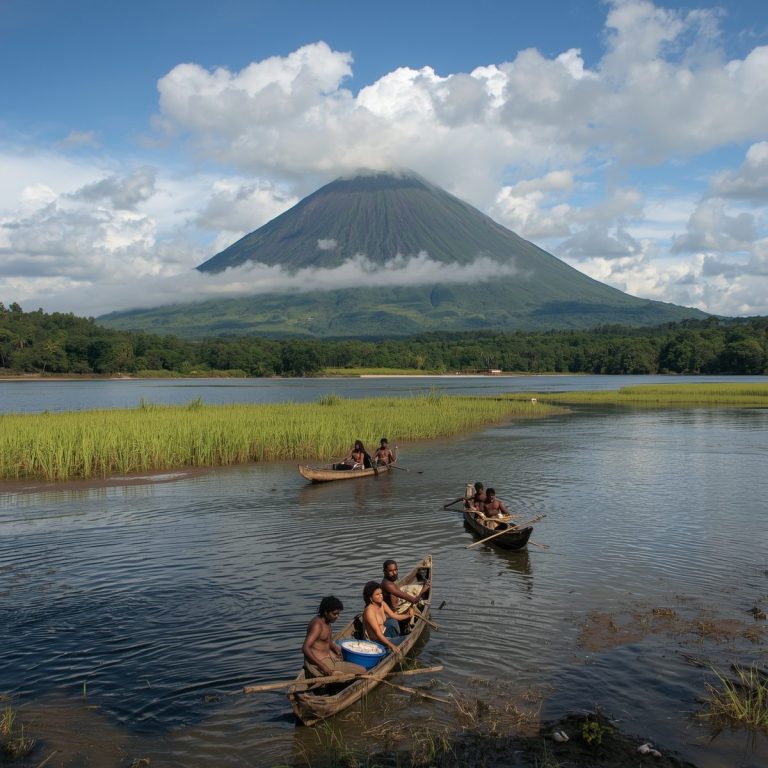
By choosing the domain 'morjin.net' , I created a link between my writing project and the vision of shared living - allowing to get a little idea of what it is about. It is actually all very related. Not only because my story was very inspired by the life I experienced here in the valley, but also because it relates a lot to community living. It's a contemporary story about an utopian island society, which has evolved in a different way than most current modern societies. Relying on the very steep, densely forested and often barely accessible volcanic topography of the island, they found ways to partially resist colonialism and christianization, gradually transforming from tribal hunters and gatherers towards a more modern form of organizing life. Their tribal way of living together never really fell apart, giving rise to a base democratic society based on community living. Those communities - called lar'ish - gradually evolved from genetically related clans towards more diverse and mixed groups of about 10 or 20 people living together. Together, they manage the local small scale farming activities, build or repair houses from local materials, or deliver home made goods, products and services to the surrounding village markets. In order to protect their sensitive, simple, laid back and nature-oriented way of life against invasive strategies of the global market, the population decided to apply the strategy of economic protectionism. High import tariffs keep the island economy rather low-key, with a functioning, but simple and fragile infrastructure - but it also supports a diverse small scale local economy providing a low but stable income opportunities to the community households. It creates an ongoing motivation towards mutual support and social exchange, needing to solve all kinds of problems together without always having access to all the amenities of modern society. Any public tax income either relies on the tariffs or voluntary donations, as the island society operates as a self-organized base democracy, with no general power of authority over island inhabitants.
The term Morjin is part of the language I am inventing for my utopian novel. The language is syllable-based, with a single syllable covering a rather broad range of meaning, e.g. lar – house, homestead, home. Joining them creates words with more defined contexts: ish – people, clan, tribe, extended family, lar-ish, larish – house of the people, the name for the traditional community households on the island.
Or in this case, mor – refers to mushrooms, decay, death or the space entered after death, and jin – network, woven fabric. Joining these syllables to Mor-jin creates the more defined meaning of a mushroom network, or mycelium. In the story, the name morjin has also been given to the local non-profit community resource website, where islanders can offer jobs, ride shares, products, request information or find people with shared interests. It also equally hosts access to all the data provided by the island administration. As the island doesn’t have any government in the usual sense, it consists of people elected bottom-up in base democratic structures, from individual inhabitant to larish, from larish to village assembly, and finally to the island administration. Together, they manage e.g. import tariffs, documentations of public income and expenses, and all this data is openly available to every island inhabitant on the morjin website. It also also supports different forms of participation in public decisions, e.g. every adult has a yearly vote on raising or lowering tariffs for specific product classes, etc. The administration has a certain amount of inevitable control about overseas travel and trade, but for the island population itself, it only functions as an administrative service within a self-governing organically evolving form of life organisation.
To run such a society, profound life education accessible to everyone is crucial. So my book also describes the sophisticated local and voluntary education system, starting with being raised in community, and finishing with a local network of larishes offering educational courses, called island university. Despite the name, it's not a single entity, but operates through individual initiatives - and it doesn't discern between practical and theoretical education. The unusual depth of education gained from community life, merging practical and theoretical knowledge and relying on low-cost solutions is also the island's primary source of export revenue.
So, by using this term, I gave you a little, rather formal insight into my writing. If you are curious, please let me know !
The End !
IMAGES:
UP: Section of the invented topographic map of the island.
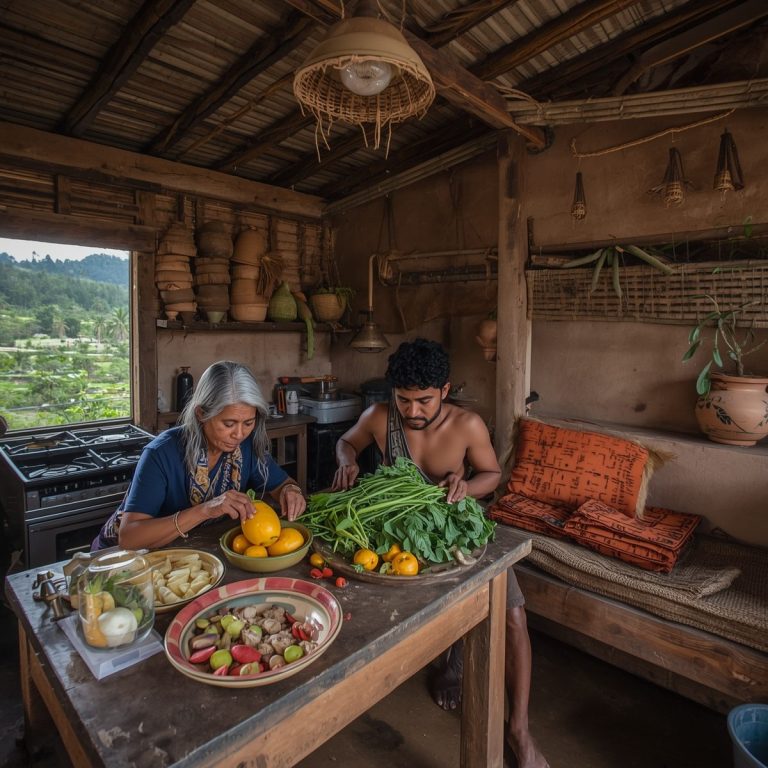
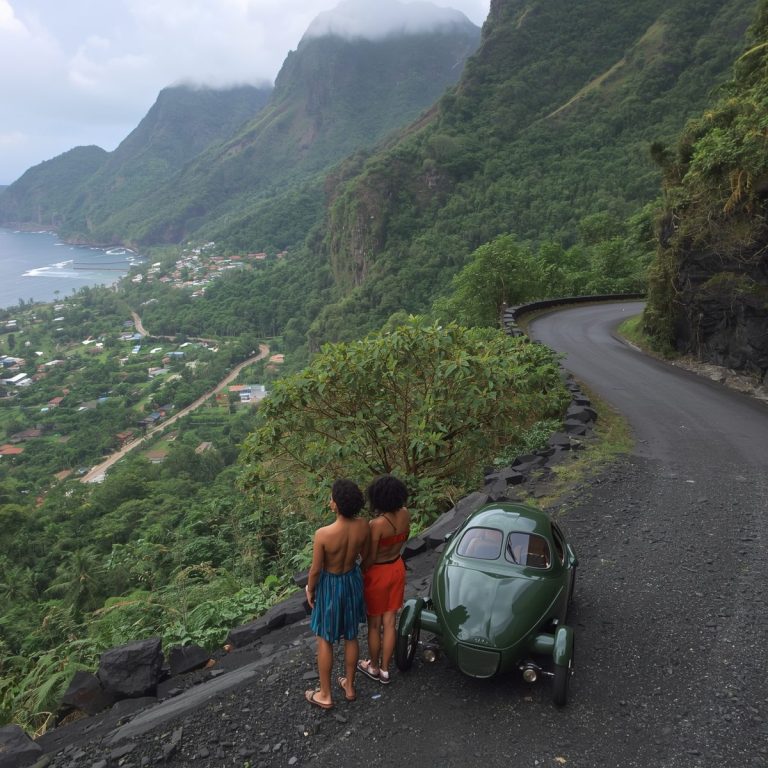
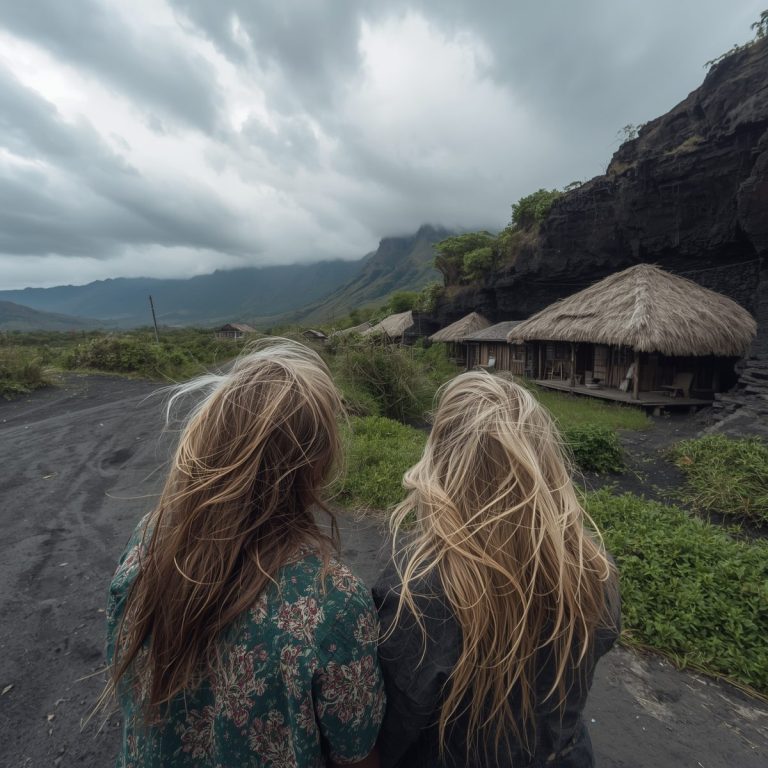
MIDDLE + BELOW: To simply enjoy - AI-generated images of the island environment, created by prompts describing scenarios from my story.